Monday, November 21, 2011

Super Failure

The so-called Super Committee on Deficit Reduction failed to agree on a package of $1.2 trillion in deficit reductions over the next 10 years.  This means that automatic reductions in spending will now be triggered in discretionary programs and defense beginning in 2013.  To illustrate how minimal these reductions really are in the context of overall spending, see the chart below.  Bear in mind this is also the same level of deficit reduction the Super Committee couldn't reach consensus on.  The bottom line is that federal spending was projected to increase by $1.7 trillion between 2013 and 2021.  It will now increase by only $1.6 trillion.


I spoke with a member of the Super Committee last August shortly before the group began their work and I shared my views on how I thought the Republicans on the Committee should approach the deliberations.  Now that the work of the Committee has concluded without success, I will share the recommendations I made. 

I  believe that a major opportunity was lost with the failed efforts of the Super Committee.  It was not unexpected but I believe that the Republicans could do a much better job of framing the issues for the average voter (rather than appearing to merely be protecting the rich) and in forcing the Democrats' hand to putting some significant spending reductions on the table.

Failure to achieve a grand bargain now has also put the entire Bush tax cuts at risk as they expire at the end of this year.  There would now seem to be very little chance that anything will be done in this regard until after the election in a lame duck session (much like what occurred in 2010).  This will also delay the opporunity for any real tax refrom until 2013 or later.

Here it is what I offered to the Super Committee and I offer again with the hope that somehow, someone, somewhere can get something done in Washington.  By the way, President Obama, where are you ?  Where is your plan?  Keith Hennessey counts up five deficit reduction opportunties that President Obama has now missed.

·         Make it known that the Republicans are interested in a budget deal that vastly exceeds the $1.5 trillion legislative requirement.  $4-$5 trillion would seem to be a reasonable goal.
·         The Republicans should also state that they will only consider revenue increases in conjunction with a “grand bargain” approaching this level of deficit reduction together with a tax reform package that would lower marginal rates and broaden the tax base.  Most importantly, the Republicans should state their desire is for a “simpler and fairer” tax system.   Most particularly, people want less complexity in their lives today and a simple tax system has great potential appeal.
·         The initial tax reform package would need to be “revenue neutral” to the current Tax Code of 2011. As part of any deal, this tax reform should be passed in 2012 to be effective January 1, 2013 coincident with the expiration of the Bush tax cuts. Taking care of this now mitigates against the risk of the Bush tax cuts expiring on schedule at the end of 2012.
·         Spending cuts must be at least 5 times any potential revenue increase in any “grand bargain”.  Lower ratios of spending cuts to revenue increases generally have not been successful in other countries in correcting fiscal imbalances. This research should be mentioned over and over to define what a “balanced approach” is.  Otherwise, the Democrats will define “balanced” to be equal parts of spending cuts and tax increases.
·         Republicans should also stop referencing dollar amounts when it comes to budget cuts.  They should always be stated as percentages of spending over the 10 year budget cycle.  Saying you are looking to reduce projected spending by 10% over the next 10 years is much easier for voters to understand than saying you are going to cut $4 trillion.  It also appears to be very reasonable in scope (which it is). This is critical in marketing any deficit reduction to voters and to defend against potential attacks by Democrats.  People need context to understand difficult issues with big numbers.  Framing as a % of total projected spending over the 10 year budget period is the way to do this effectively.
·         Any revenue increases agreed to would have to be contingent on spending cuts coming first.  This could involve increasing the marginal rates on the new broader based tax system after it was implemented.  This could be structured as an across the board increase on all rates proportionally.  Or it could be tilted to the top rate bracket if necessary to get a deal with the Democrats. I would always explain this by stating that we agree with President Obama that “we need to eat our peas first”.  Revenue increases are the dessert you get if you do the tough stuff first.  I would further explain that this is the Republican definition of a balanced meal or menu to address our problems.
·         I know that stating that there should be any agreement to a revenue increase is an anathema to most Republican voters.  However, I continue to believe that it is not the tax increase per se that people are worried about.  They know all too well that tax increases get signed into law but the spending cuts never materialize as advertised.  Therefore, any revenue increases must be contingent based on the actual spending cuts taking place. I have not spoken to one person that would not agree to some tax increase if they were assured that it would actually help solve the problem. That is why there has to be an iron clad mechanism that insures the spending cuts are “in the bank” before revenue increases take effect.   
·         In any event, the “tax increases” in the package I am recommending may never be assessed and realized if the economy rebounds and if tax reform and lower marginal rates realize their full potential.  I recommend that any revenue package should have a ceiling that limits revenues to no more than 18.5% of GDP (see below).
·         If the economy does not recover soon, the pressure to raise taxes (especially on the wealthy) will grow even stronger.  Revenues as a % of GDP at less than 16% are not enough to sustain even the most minimal governmental obligations.
·         There is no other way that I know of to build a bridge to a possible deal than with this contingent tax approach.  It may not completely satisfy the hard line Tea Party member but it will be viewed as reasonable by most Americans.  Most importantly, it will put the onus on the Democrats to take the lead on suggesting spending cuts.  It also provides breathing room for our economy to recover before any tax increases could take effect.
·         An additional requirement for any revenue increases is that they must not take federal receipts as a % of GDP over a maximum limit of 18.5%.  It should be explained to voters that this limit is actually higher than the long term historical average for revenues of 18.2% as another example of the reasonable nature of the Republican approach to deficit reduction. If revenues in any year exceed this amount, the excess must be refunded pro-rata to those who paid it or used exclusively to retire the federal debt.
In summary, I would describe this to the American people as a plan similar to what their mother would do.   A balanced meal is being offered with everything on the table.   However, we have to eat our peas first.  Tax increases are like the dessert.  You get them if you eat your peas first.  Your mother knows that if you eat your dessert first you quickly lose your appetite for the peas.  We cannot afford to keep eating the dessert first.  We need to get leaner first to have room for dessert later.

If you are a fiscal conservative, would you support this plan?

Sunday, November 20, 2011

Velocity, Mobility and Mom

The velocity of money is an important concept in economics but it is seldom mentioned in the popular press.  Simply stated, it is the rate at which money circulates or changes hands in an economy.  Higher velocity means that the same quantity of money is used for a greater number of transactions.  It is measured as the ratio of GDP to the money supply.

For example, if Bill and Bob live on an island and there is only $100 in the money supply but Bill sells a supply of coconuts to Bob for $100 in January and Bob sells a supply of mangos to Bill in February for $100 then the velocity of money is 2.  If they continue to sell each other goods for the remainder of the year they will have created $1,200 of GDP with only $100 of money supply for a velocity factor of 10.

The reason we have not seen large scale inflation in our economy even though we have had increases in the money supply by the Fed through quantiative easing (printing money) is that the velocity of money in our economy has dropped precipitously over the last couple of years.

This chart from the Federal Reserve Bank of St. Louis tells the story of the drop in money velocity.


This is the chart on the increase in the M2 money stock from the same source.


Why has money velocity slowed?  People are concerned.  Banks are nervous.  There is less spending and less need for borrowing. When someone does want to borrow, the banks are less willing to provide credit than they were a few years ago.  A lot of it has to do with mobility.  Fewer people are moving.  This is a function of the economy and the housing meltdown.

Between 2010 and 2011 only 11.6% of Americans changed residences.  This is the lowest rate since the Census Bureau began collecting this data in 1948.  By comparison, in the mid-1980's, more than 20% of Americans moved each year.  California, which historically was a magnet for mobility ("Go West Young Man"), is now populated principally by natives.  More than half of California residents are natives for the first time since the late 1800's.

Another factor in the reduced money velocity is that just 950,000 new households were created last year.  By comparison, about 1.3 million new households were formed in 2007. Fewer households means fewer rentals, mortgages, furniture and appliance purchases, cable hook-ups and everything else.
This chart from The New York Times provides the longer term perspective on household formations.  We are at low levels that have not been seen in decades.


A big reason for this is that many young people are moving in with Mom.   14.2 percent of young adults are living with their parents.  Among young men, 19 percent are living with Mom.  This is driven in large part by the fact that just 74 percent of Americans ages 25 to 34 are working.  If you don't have a job you move in with Mom.  It keeps the expenses low but it also impacts money velocity.

When will we know that the economy is improving?   Keep your eye on velocity, mobility and Mom.

Monday, November 14, 2011

CO2 Context

I have written before that context is everything when assessing anything.

You can not evaluate anything or make any decision in a vacuum.  It is simply impossible.  You need a frame of reference.  You determine whether a girl is beautiful based on having seen thousands of girls.  You decide whether a shirt is a good deal after looking at other shirts and their prices.  A house is a bargain only after you evaluate the local market.  After all, the identical house might be a bargain in Beverly Hills but massively over-priced in Bloomfield Hills.

What context do you have to evaluate the statement that "Global warming is caused by the emission of carbon dioxide"?  I would imagine most people would have almost no frame of reference to determine if that was reasonable or not even though we hear it all the time.  Any frame of reference is merely the fact that Al Gore and a bunch of other people are always saying it.

What information would you need to know to determine if that statement makes sense?  How about a fact like how much carbon dioxide is produced naturally during a given year?  Compared to that number, how much do humans produce?   From what you hear from the Global Warming crowd you are led to believe that human produced CO2 is a massive number that is increasing yearly compared to what is being produced naturally.  What are the facts?

Dr. Tim Ball is a former Professor at the University of Winnipeg who has had a significant academic interest in climate over the years and writes often about the way the environment affects humans and the way humans affect the environment.  He provides needed context to the CO2 question in "Whether It Is Warming or Climate Change, It Cannot be the CO2."

The facts are that the amount of human produced CO2 is a mere fraction of the natural production of CO2 on earth.  Ball cites data from the Intergovernmental Panel on Climate Change (IPCC) to provide the context.

According to the IPCC, who produce the original numbers, humans produce approximately 9 gigatons of CO2 per year. This is within the error factor for the amount of CO2 from at least two natural sources. Estimates of CO2 from natural sources are very crude as evidenced by the large error factors. Reports with headlines like, “Forests soak up more CO2 than thought” and “Old-growth forests absorb CO2 too: study” keep appearing. In 2010 humans produced 9 gigatons, but ocean output was between 90 and 100 gigatons and ground bacteria and rotting vegetation was between 50 and 60 gigatons according to Dr Dietrich Koelle. Spread the human annual production across the planet and it doesn’t even show on the world map. The pattern confirms this because it reflects natural sources.
To summarize, natural sources of CO2 on earth produce between 140-160 gigatons of CO2 per year and all human produced CO2 amounts to 9 gigatons!   Human produced CO2 is so minimal compared to the naturally produced CO2 it is less than half of the margin of error of the estimate of natural sources.

What I found more interesting in Ball's article was a satellite map of sources of CO2 emissions that had been recently published by a Japanese Research Institute.  It was put together with the intent to display how much each region needs to reduce its CO2 emissions in the future.  If that is the case, then the Northern Hemisphere doesn't have anything to worry about but the Southern Hemisphere better get their act together.  North America is a net consumer (not producer of CO2) as is Western Europe.  In effect, the most advanced industrialized countries in the world are consuming rather than producing CO2.


Red is for high C02 emissions; Green is for net absorption of CO2 (no emissions); White is low or neutral

With this context in mind, I need someone to explain to me exactly why the United States supposedly needs to limit the use of fossil fuels and the emission of carbon dioxide?  Why are we so intent on further hurting our economy when you look at these facts in context?

Credit to Powerline for making me aware of Ball's article.

Tuesday, November 8, 2011

The Perversity of Public Policy

Election Day in Ohio today means that voters are voting on Issue 2-deciding whether or not the law passed earlier this year (SB 5) that would rein in collective bargaining for public employees in the state is retained (a YES vote) or repealed (a NO vote).

The ad campaign by the unions that want to repeal SB 5 argues that if SB 5 is retained there will be catastrophic cuts in police and fire services and that somehow teachers won't be as good in teaching our children as they are today.  It makes for good ad copy but the reality is that if SB 5 does not survive we will inevitably see reductions in essential services and the number of teachers.  Why?  It is simple math.  The more money that is spent on collectively bargained items like benefit costs, pension and retiree health care costs means less money  is available for current wages for the current services of policemen, firemen and teachers.  Such is the perversity of public policy.  You almost never get what is advertised.  

Tax increases never bring in the revenues that are projected.  Tax cuts often result in more revenue. Welfare reform in the 1990's was supposed to throw millions of children into poverty.  Child poverty actually dropped substantially in the 3 years after welfare reform was enacted.  Unemployment benefit extensions tend to do nothing more than keep people on unemployment.  The more money government throws at problems to help people, the more expensive it often becomes.   These are all examples of the perverse effects of public policy.

For example, look at this chart of the inflation in three areas that government is heavily involved in with government programs or subsidies to supposedly help the middle class.  Higher education (college student loans), Healthcare (Medicare, Medicaid, Obamacare) and Housing are all shown in comparison with overall price increases. 


Source:  American Institute for Economic Research

The perverse fact is that as the government attempts to help by throwing money at the "problem" it actually drives overall costs up.  Since there is more money chasing the goods and services in that area of the economy it inevitably pushes prices up in that sector for everyone.  Of course, as prices increase further the public policy argument is that even more government subsidies are needed to deal with the escalating costs.  And on and on the cycle continues...

Look no further than California to see exactly what I am talking about in the case of collective bargaining for public sector employee benefits.  California is totally run by the public sector unions and an extreme liberal agenda.  These groups are in the process of bankrupting almost every governmental entity in the state.  For example, the city of San Jose, California now spends over 50% of its annual budget on pensions and health care cost for its retired city workers.  When this much money is needed for ex-workers there is very little left for current workers and current public services.  Michael Lewis details the impacts on San Jose in "California or Bust" in Vanity Fair magazine that I wrote about in "Because We Can Becomes Because We Can't." 


As a result, San Jose, once run by 7,450 city workers, was now being run by 5,400 city workers. The city was back to staffing levels of 1988, when it had a quarter of a million fewer residents. The remaining workers had taken a 10 percent pay cut; yet even that was not enough to offset the increase in the city’s pension liability. The city had closed its libraries three days a week. It had cut back servicing its parks. It had refrained from opening a brand-new community center, built before the housing bust, because it couldn’t pay to staff the place. For the first time in history it had laid off police officers and firefighters.

I have written several times about the fundamental flaws in the justification for public sector unions, here, here and here.  David Brooks in the New York Times explained just a few of the reasons why public sector unions do not make sense.

In Wisconsin and elsewhere, state-union relations are structurally out of whack.
That’s because public sector unions and private sector unions are very different creatures. Private sector unions push against the interests of shareholders and management; public sector unions push against the interests of taxpayers. Private sector union members know that their employers could go out of business, so they have an incentive to mitigate their demands; public sector union members work for state monopolies and have no such interest.
Private sector unions confront managers who have an incentive to push back against their demands. Public sector unions face managers who have an incentive to give into them for the sake of their own survival. Most important, public sector unions help choose those they negotiate with. Through gigantic campaign contributions and overall clout, they have enormous influence over who gets elected to bargain with them, especially in state and local races.
As a result of these imbalanced incentive structures, states with public sector unions tend to run into fiscal crises. They tend to have workplaces where personnel decisions are made on the basis of seniority, not merit. There is little relationship between excellence and reward, which leads to resentment among taxpayers who don’t have that luxury.

Governor John Kasich and the Ohio Legislature put together SB 5 to attempt to bring some balance to the process and preserve future governmental services.  This is simply too much of a threat for the unions and a reported $25 million has been spent to repeal SB 5.  If they succeed, Ohio will be a much less attractive place to live in future years.  There will be continuing pressures from increasing property and other taxes while essential services will be reduced.  Inevitably it will mean that Ohio becomes a very unattractive place to live and work. 

California, with all of its natual advantages of geography and climate, is seeing business fleeing and the loss of high income taxpayers who have the flexibility to move.  This exacerbates the budget pressures even further.  Which causes more outmigration which creates more budget pressures.  And on and on the cycle continues...

Ohio does not need to become California.  Ohio voters have the opportunity to make sure it does not happen today.


Sunday, November 6, 2011

Occupy Wall Street First Hand

I was in New York City last week and I made a special trip to Zuccotti Park in order to see Occupy Wall Street first hand.

Although I agree with the general thesis that the playing field in recent years has been tilted from Main Street to Wall Street, I saw nothing at OWS but a group of dirty, disgusting derelicts.  Here is an example of the street scene in a photo I took.


From my tour around OWS it was difficult to see anything positive.  Many of the signs had vile language.  It was difficult to see any kind of coherent message.  Seeing it first hand, it is clear that the media has downplayed the degeneracy of this group.

We have real problems in this country.  If these are the people who are going to lead us to greater promise we are in far deeper trouble than we are already.

What is most troubling is the free pass that has been given to this group.  They have taken over what is privately owned property (although it is available to the public) in blatant disregard of individual property rights.  They have shown little respect for the people who live and have businesses in the area.


Would these actions have been tolerated if this was an openly Communist group?  The Ku Klux Klan?  New Nazi Party?  The Tea Party?  I think not.  They were given a pass because it is "cool"to be an anti-establishment, anti-capitalist liberal.  It is not cool to be a patriot who embraces the Constitution (not just the First Amendment) and believes we should live within our means.

However, even the liberal elite who populate Lower Manhattan seem to be losing patience with the group and are rethinking their political sympathies in favor of needed law and order as reported in this article in the National Review by Charles W. Cooke.
One resident summed it up perfectly: "This is about the law.  They have been given a waiver for too long."
It was also generally conceded that previous resolutions at both the state and community-board levels-which routinely started with a statement of support and a reiteration of fealty to the First Amendment-were a big mistake.  "We shouldn't have expressed any political position" was the regretful consensus of the Community Board.
One of the critical functions of government  is to "insure domestic tranquility".  It is in the preamble of the U.S. Constitution.  Most historians trace the roots of this important governmental role to concern by the Founders on what they had witnessed in "Shay's Rebellion" that transpired shortly before they convened to draft the Constitution.  Ironically, Shay's Rebellion was based on many of the same themes that seem to be present with OWS.  Tough economic times.  Too much debt.  Animosity against the affluent.  A short summary of Shay's Rebellion follows.  There is more background in Wikipedia if you are interested.
After the American Revolution the young nation was torn by unsettled economic conditions and a severe depression. Paper money was in circulation, but little of it was honored at face value. Merchants and other "sound money" men wanted currencies with gold backing. In Massachusetts the "sound money" men controlled the government. Most of those who were harmed by the depression were property-less and thus unable to vote. The quarrel grew until thousands of men in the western counties rose in armed revolt. They were led by Daniel Shays (1747-1825), a captain during the American Revolution. Shays' Rebellion lasted from August 1786 to February 1787.

The agitators objected to heavy land and poll taxes, the high cost of lawsuits, high salaries of state officials, oppressive court decisions, and dictatorial rulings of the state senate. In Northampton on August 29 the mob succeeded in keeping the courts closed so debtors could not be tried and put into prison. Fearful of being tried for treason for this action, Shays and his men broke up the state Supreme Court session at Springfield the following month. The revolt took a more serious turn when Shays and a force of 1,200 men returned to Springfield in January to capture the arsenal. Action by the national government prevented the attack on January 25. Most of the insurgents were captured in early February, ending the rebellion. The leaders were condemned to death for treason but were later pardoned. Shays himself later received a war pension for his service in the American Revolution.

Shays' Rebellion was one of several disturbances in different states. It hastened the movement for a federal government strong enough "to ensure domestic tranquility," as stated in the preamble to the Constitution, which established the United States.

The Founders took two important lessons from Shay's Rebellion and incorporated it into the principles of the Constitution.  James Madison summarized it well.

"Liberty may be endangered by the abuses of liberty as well as the abuses of power."


Shay's Rebellion was also the catalyst to bring George Washington back into public service after his retirement as the leader of the Revolutionary Army.  The Rebellion convinced him to return to public service and work for a strong federal constitution to replace the Articles of Confederation. In fact, Washington had no patience for trying to influence or appease Shay's group of desperate debtors. He wanted "a government by which our lives, liberties and properties will be secured" to insure that such tumults would not be allowed to occur.

The proper role of government is to be an impartial arbiter for all citizens.  People have the right to exercise their free speech and to peaceably assemble.  They do not have the right to occupy a park, disobey all municipal ordinances and disrupt the lives of other citizens.  In the words of Madison, the OWS protestors have abused liberty.  At the same time, The City of New York and other similar cities that have allowed these occupiers to abuse liberty have failed in their basic governmental duties of insuring domestic tranquility.

The OWS protestors have also failed in not recognizing the real source of their complaints. They shout about Wall Street but their real focus should be on Washington.  If Wall Street or the so-called "1%" has abused power, where has Washington been while it has been occurring?  We have a Securities and Trade Commission, a Federal Trade Commission and a National Labor Relations Board to name just a few.  What good is all this regulation if it does nothing to prevent the abuses of power that the OWS crowd is complaining about?  Who at Fannie Mae or Freddie Mac were held to account?  Who on Wall Street was indicted?  Which of the "too big to fail" financial institutions were broken up?

Our Constitution states that the key duties of our government are to provide for the common defense, establish justice, insure domestic tranquility and promote the general welfare. It is not supposed to pick sides. It was not designed to pick winners and losers. Its role was seen to protect both and to see that both had a level playing field. It is supposed to be about the public interest rather than special interests.  

It is far past the time for New York City and other cities to move in and shut OWS down.  They can protest but they should not be allowed to occupy anything.  In fact, the protestors should move out to Washington, not Wall Street.  That is the source of their complaints whether they understand it or not.

Postscript:

When researching this blog post I came across the following list of grievances of Shay's group.  It is ironic that it seems to encompass the combined complaints of both OWS and the Tea Party.  This is from an article by the Constitutional Rights Foundation on Shay's Rebellion.

FIRST: The present system of taxation operates unfairly between the poor and the wealthy classes. (OWS want higher taxes on the rich)

SECOND: The tax rates have been set too high. (Tea Party)

THIRD: There is a shortage of cash money, and farm goods are not accepted as payment for debts and taxes. (OWS wants even more money to be printed and redistributed.  One protestor even stated that every person should be allowed to print their own money!)

FOURTH: Court and lawyer fees are set too high. (Tea Party views on government regulations)

FIFTH: State government officials are being paid fattened salaries. (Tea Party)

SIXTH: The state capital at Boston should be moved inland. (Tea Party & OWS-a clear statement that the people believed government was too removed from the concerns of the people.  Less centralized power in Washington would be the argument of the Tea Party.  Too much power between government and Wall Street would be the argument of OWS).

Thursday, November 3, 2011

Chariots of Fire

A BeeLine reader sent me the following story.  I like history, trivia and "sticky" stories.  This is one I am sure you will remember.  This is a real Chariots of Fire story.  


 Railroad tracks.
The  US   standard railroad gauge (distance between the rails) is 4 feet, 8.5 inches. That's an exceedingly odd number.
 
Why was that gauge used? Because that's the way they built them in England , and English expatriates designed the US railroads.

Why did the English build them like that? Because the first rail lines were built by the same people who built the pre-railroad tramways, and that's the gauge they used.
 
Why did 'they' use that gauge then? Because the people who built the tramways used the same jigs and tools that they had used for building wagons, which used that wheel spacing.


Why did the wagons have that particular odd wheel spacing? Well, if they tried to use any other spacing, the wagon wheels would break on some of the old, long distance roads in  England , because that's the spacing of the wheel ruts.

 
So who built those old rutted roads? Imperial Rome built the first long distance roads in Europe (including  England ) for their legions. Those roads have been used ever since.

 And the ruts in the roads? Roman war chariots formed the initial ruts, which everyone else had to match for fear of destroying their wagon wheels.


Since the chariots were made for Imperial Rome, they were all alike in the matter of wheel spacing. Therefore the United States standard railroad gauge of 4 feet, 8.5 inches is derived from the original specifications for an Imperial Roman war chariot. Bureaucracies live forever.


So the next time you are handed a specification/procedure/process and wonder 'What horse's ass came up with this?' , you may be exactly right. Imperial Roman army chariots were made just wide enough to accommodate the rear ends of two war horses. (Two horses' asses)


Now, the twist to the story:
 
When you see a Space Shuttle sitting on its launch pad, there are two big booster rockets attached to the sides of the main fuel tank. These are solid rocket boosters, or SRBs. The SRB's are made by Thiokol at their factory in  Utah.


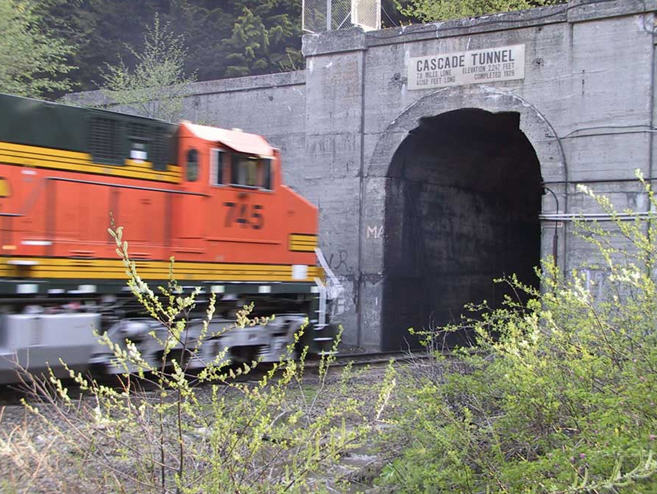
The engineers who designed the SRBs would have preferred to make them a bit fatter, but the SRBs had to be shipped by train from the factory to the launch site. The railroad line from the factory happens to run through a tunnel in the mountains, and the SRBs had to fit through that tunnel. The tunnel is slightly wider than the railroad track, and the railroad track, as you now know, is about as wide as two horses' behinds.


So, a major Space Shuttle design feature of what is arguably the world's most advanced transportation system was determined over two thousand years ago by the width of a horse's ass. 

Tuesday, November 1, 2011

Ducks On A Pond vs. Sitting Ducks?

Between 1926 and the end of 2010, the S&P 500 stock index produced an annualized return of 9.9% per year. Long term goverment bonds only returned 4.4% per year over that period.

Between 1802 and 2010, U.S. stocks generated a 7.9% annual return vs. 5.1% for long-term government bonds.

In the 30 years ending September 30, 2011, the S&P 500 has returned 10.8% per year.  This is better than the historical long-term average for stocks.  However, long-term bonds have averaged 11.5% over the last three decades.  That is over double the historical averages.  It is also the first time since the Civil War that bonds have outperformed stocks over a 30 year time period.

What are we to make of all of this?  First, the last 30 years have been an unprecedented period to accumulate wealth through investing.  It did not really matter how you allocated your money between stocks and bonds.  If you put money aside 30 years ago-you ended up much better than investors have done historically over that timeframe.  It was like shooting sitting ducks on a pond.  No matter where you aimed you were likely to hit something that produced rewards.

How did this occur?  If you go back to October 1, 1981, 30 year treasury bonds yielded 15.19%.  The yield was 2.92% on the 30 year bond as of September 30, 2011.   That has been one heck of a great ride for bond investors.  As you know, bond prices increase as yields decrease.  On the other hand, the S&P 500 Index was a mere 116 in the Fall of 1981.  30 years later it was over 1,100-a 10-fold increase.  It is hard to argue with those results if you just woke up after a 30 year slumber.

However, for those of you who have lived through the last decade the view looks much different. Early in 2000, the S&P 500 stood at over 1,500.  This meant that an investor had actually been able to multiply their money over 13x in less than 20 years between 1981 and 2000.  Of course, the last 11 years has seen the S&P stock investor actually lose money.  In investing timing is everything!  Your view of the world is much different if you invested in 2001 vs. 1981.

What conclusions can we draw from this for the future?  The profit you make from any investment is more dependent on the purchase price than the sales price.  If you buy right, it is hard to not come out right.  In 1981 stocks had done almost nothing for well over a decade.  Stocks were selling at pretty much the same level that they were at in the late 1960's.  At the same time, interest rates increased to unprecedented levels as the Federal Reserve tried to wring inflation out of the system.  Stocks were due for a rebound.  Interest rates looked like they had no where to go but down.  Of course, all of this is crystal clear in hindsight.  It was a little murkier if you had money to invest at that time, as I did.  Who said that interest rates might not go to 20%?  And if interest rates kept going up that was a prescription for much lower stock prices as more money would inevitably be attracted to the higher yields and less volatility in bond investments.

If you apply those lessons to today you have to believe that interest rates cannot go much lower. In addition, how can anyone feel confident about investing in a long term Treasury bond with that small yield when you consider the massive federal budget deficit. 

Stocks have also stagnated for over a decade.  Aren't they due for a rebound?  If inflation does heat up aren't you better with a stock that provides a hedge on inflation rather than a bond that leaves you totally exposed to eroding your purchasing power?  We have also just had the first 30 year period in 150 years that stocks underperformed bonds.  Stocks must be a buy. These are all logical responses to where we are today.

However, between 1803 and 1871-a period of 68 years- bonds outperformed stocks.  That is over twice as long as the period of bond outperformance we have just experienced.  In addition, since 1900,
the stock markets of four major countries have seen investors lose all of their money.  Russian investors were wiped out after the Bolshevik Revolution and the same result occurred to the Chinese, Argentinians and Egyptians.  The Germans were almost totally wiped out twice and the Japanese once due to starting and losing wars.  Helpful investment advice--Beware Wars, Revolutions, Communist and Totalitarian regimes.  They are hazardous to your health and wealth.

Where does this leave us?  I think we are in the most challenging investment period of my lifetime.  There are no easy answers anywhere.  I have tremendous confidence in the ingenuity, imagination and instincts of human beings.  The human capital is there for tremendous advances in productivity and prosperity over the next several decades.  However, so much is dependent on getting the right political and policy framework to make it happen.  We have got to solve the fundamental issues of government in this country.  This is the wild card.  The people will progress if they are allowed to.  However, history has shown that too often government gets in the way.  If we allow that in this country we are all sitting ducks with our money.  Let's hope we can learn some lessons from Europe and get our fiscal and political house in order soon.

In the meantime, do not put all your eggs in any basket.  That is a lesson no one should ever ignore.


Credit to Rob Arnott in the Fundamental Index Newsletter for the data in this blog article.

Thursday, October 27, 2011

Occupy Your Mind... With Facts

A lot has been made recently about the alleged uneven distribution of income in the United States.  The Occupy Wall Street crowd ("Flea Party" as Ann Coulter calls them) is attacking the so-called top 1%.  USA Today had an article yesterday on the front page on "The Fading Middle Class" and referenced the statistic that the top 20% of households collected 50% of all U.S. income.  Granted, this is clearly not consistent with the ideals of communism or socialism but is it much different than in other countries in the world?

You never see these statistics in the media as they relate to other countries.  I was curious how the U.S. compared to other nations on this metric.  After all, in any society ever known to mankind there have been rich and poor people.  It was true in Babylon, Athens and Rome as well as in Moscow and Havana.  A quick trip to Google provided some information.  I could not find any information on the top 1% but I did find the numbers for how much of each country's household income was earned by the top 10% in each nation.

The United States is actually way down the list when it comes to the concentration of income in the top 10%.  We rank 77th out of 139 nations in the data compiled by nationmaster.com using CIA World Factbook sources.  30% of national household income is held by the top 10% of households in the U.S.  The average worldwide is 31.5% meaning that income is less concentrated in the U.S. among wealthy households than it is in the world at-large.

Here are some of the countries that have more income concentrated with the wealthy than we have in the United States.  Canada (46%), Columbia (45%-the drug lords do pretty well down there and don't seem to be sharing it very well), Brazil (43%), Chile (42%), Taiwan (40%), Kenya (38%-perhaps President Obama should be focusing more on class warfare in his father's country?), Mexico (36%-no wonder we get so many illegal immigrants coming across the border), Turkey (33%), Venezuela (33%-Sean Penn wants us to be more like this socialist country?),  Argentina (33%), India (31%), Russia (30.4%-that's right, the former Communist country).

The United States has essentially the same concentration of income as Communist Vietnam and the Totalitarain regime in Iran.  They are #78 and #79 on the list.  There was no information at all for communist Cuba and North Korea.  They don't have much income to spread around anyway and what they do have undoubtedly ends up in the pockets of the party elite.  China is listed as being toward the bottom of the list but this seems very suspect.  This article states that the top 10% earns 65 times the amount of the poorest 10% in China (and this is a Communist country?)  I doubt that the Communist Chinese want to publicize their actual numbers too openly or broadly.  It does not seem to fit the party platform they are selling to the people.

The European Union average concentration in the top 10% is 25.4%.  Of course, their economic model is not working out too well for them right now.   Greece, Italy and Spain (the debt-laden countries of the EuroZone) all have about 26% concentration in the top 10%.  However, the lack of future growth is the biggest problem these countries face in servicing their debt.  Could it be that the incentive to get rich and get to the top 10% helps everyone?  While they are banging their drums at Occupy Wall Street they might want to occupy their minds with that thought...and the facts above.

Wednesday, October 26, 2011

Do Illegal Immigrants Deserve This Much Credit?

I am really getting to like the work of the Treasury Inspector General for Tax Administration (TIGTA).  Last week I wrote about their report that showed how millions are claiming tax credits for higher education that they are not entitled to.  This week I came across a July, 2011 report that shows how illegal immigrants are actually collecting far more in dollars from the IRS than they are paying in federal income taxes.

How is this possible?  REFUNDABLE TAX CREDITS!

The TIGTA Report dated July 7, 2011 is entitled "Individuals Who Are Not Authorized to Work in the United States Were Paid $4.2 Billion in Refundable Credits".   The $4.2 billion was entirely the result of refundable tax credits for the Additional Child Tax Credit (ACTC) for the 2010 tax year.

Peter Schulkin with the Center for Immigration Studies explains what this means in a memorandum he wrote on the subject last month.

The ACTC is a bit of a misnomer since it does not have to do with multiple children but rather represents the refundable portion of the Child Tax Credit (CTC) when the CTC (worth up to $1,000 per qualifying child) results in a negative total tax due. In short, filers for the ACTC have no federal income tax liability and the ACTC amount represents Treasury money that is distributed to them.
An illegal immigrant cannot qualify for a legitimate Social Security number to use to file income tax returns or for any other purpose. However, the IRS allows illegal immigrants to apply for a nine-digit Individual Taxpayer Identification Number (ITIN) to be used to file federal income tax returns, and all but a small minority of returns filed with ITINs are filed by illegal immigrants.
The Table below from Schulkin's memorandum shows the numbers.


Using Table 1, it can be seen that for the 2010 processing year more than three million returns were filed with ITINs. Of these, 2.3 million paid no federal income taxes and collected an aggregate of $4 billion from the Treasury in refundable tax credit money from the ACTC. Of those who did not file for the ACTC, most used the CTC to reduce or eliminate their tax liability and thereby recover all or part of any federal income tax money withheld by employers. Of all of the 2010 ITIN filers, fewer than one-quarter paid any federal income taxes, which amounted to about $0.87 billion in total. Thus, on a net basis, ITIN filers gained $3.13 billion ($4.0 billion minus $0.87 billion) from the IRS in the 2010 processing year. The sum of row 6 in Table 1 equals $7.37 billion, which represents an approximation of the total net outflow of IRS funds to ITIN filers for the 2005-2010 processing years.
What are some conclusions that can be drawn from this data?

  • Supporters of illegal immigration argue that illegal workers are paying large sums of taxes in this country and deserve government benefits.  In fact, of those actually filing tax returns, less than 1 in 4 owed any tax according to this data..
  • Due to the refundable nature of the child credit we are providing money to illegal immigrants and the more children they have the more we pay.  This is yet another incentive for illegal aliens to enter, reside and work in the United States without authorization.
  • When you consider that each of the 3+ million tax returns (and 2.2 million tax returns that claim the refundable tax credit) that are filed with ITIN's are almost assuredly illegal immigrants why is it so hard to enforce the immigration laws?  The IRS has an address on the tax return of the filer and they most likely also have the name of the employer as well.  I don't think you can have a clearer case that the federal government has no interest in enforcing the immigration laws.
We have an unemployment rate of over 9%, we borrow over 40 cents of every dollar we are spending in the federal budget and we have total federal debt of over $14 trillion and we allow this to occur?  It is beyond belief.

Tuesday, October 25, 2011

Europe's Problems In A Few Words

Europe continues to grapple with its serious debt and banking crisis.  "Europe: Grimmer by the Minute" is the headline CNN/Money is using today.   MSN.news leads with "Unknown Territory for Europe if Summit Fails:France".

Why is it so hard for the Europeans to come to grips with reality?  First, consider that they are dealing with 27 different European Union members.  Second, the Europeans are not known to look for simple solutions.  They believe that more government, more regulation and more bureaucracy is better. Consider the following and ask why we would ever want to follow them down any path relating how to govern ourselves or run our economy?

Pythagorean Theory...................................................  24 words
Lord's Prayer..............................................................66 words
Archimedes' Principle................................................ 67 words
Ten Commandmants.................................................179 words
Gettysburg Address..................................................286 words
U.S. Declaration of Independence.........................1,300 words
U.S. Constitution with all 27 amendments............7,818 words
EU regulations on the sale of cabbage................26,911 words


This is compliments of Grant Williams from his newsletter, "Things That Make You Go Hmmm..."

A couple other factoids on the Europeans fascination with regulating their economy from Williams.

THIS IS HOW EUROPEAN BUREAUCRACY WORKS, PEOPLE!!!!
Millions of Euros spent on days of ‘talks’ to come up with solutions that fail to address any REAL problems.
Don’t believe me?
Article 47 of the Common Fisheries Policy will ensure that every fish caught by an angler is notified to Brussels so that it can be counted against that countries quota. If you go out for a days fishing and catch a couple of cod or mackerel you will now be required to notify the authorities or face a heavy fine.
There are EU regulations on the greenness of the person on the pedestrian crossing lights.
There are 3 separate EU directives on the loudness of lawnmowers.
Regulation (EC) 2257/94 - a great read, by the way - stated that bananas must be ‘free from malformation or abnormal curvature of the fingers’. It also contained stipulations about ‘the grade, i.e. the measurement, in millimetres, of the thickness of a transverse section of the fruit between the lateral faces and the middle, perpendicularly to the longitudinal axis’ ...
And then there are cucumbers:
Under regulation (EEC) No 1677/88 cucumbers are only allowed a bend of 10mm for every 10cm of length.
Do you think any of those were drawn up in 10 minutes on a single piece of paper?
How does Williams see the European debt crisis playing out?

Europe is broken and the people charged with trying to fix it are clearly not up to the job. There are way too many vested interests, too many national peccadillos and way too many good, old-fashioned egos in play for it to come down to anything but a last-ditch solution when they are forced into it - and that solution WILL be the printing of money in some shape or form which will help to magically inflate the debt away. The other alternatives are either just too painful (default/ forgiveness) or plain unworkable (growth).

Monday, October 24, 2011

Energy Makes Us Go, For Obama It Is A No-Go

President Obama could not get his Jobs Bill through the Democrat-controlled Senate.  He is now attempting to break it into parts and pass individual pieces.  He is faring no better with this strategy so far.

In the meantime, he ignores the most basic and logical answers for economic growth and job creation.  For example, what is he doing about energy?   Quite simply, energy makes our economy go.  We need it for anything we want to do.  It needs to be available and it needs to be affordable.  President Obama has chosen to throw billions of dollars at so-called "green" energy projects like Solyndra while totally ignoring traditional energy resources that are proven and plentiful.  The Congressional Research Service recently issued a report that America's combined energy resources are the largest on earth.

In fact, they eclipse Saudi Arabia (3rd), China (4th) and Canada (6th) combined.


Peter Glover in his article, "U.S Has Earth Largest Energy Resources" sums it up well.

If the White House is in any way serious about impacting the economic Black Hole that is the burgeoning national debt, reinvigorating business big-time, creating real jobs and restoring ebbing national wealth, the best shot by a distance if you’re American ... well, you’re standing on it, or rather above it. 
While love, spiritually speaking and in fiction, may make the world go around, it is energy – and mostly hydrocarbon energy – that actually drives it. As blockbuster thrillers sometimes put it, “Who will tell the President?”
What is more perplexing is the fact that high energy costs most directly impact those on the bottom of the income scale-those that President Obama purports to want to help the most with his redistribution schemes.

Consider the impact of high gasoline prices.  A recent report, "The Energy Trap" by the New America Foundation that details the impacts of high gas prices on American households provides some perspective.
By the end of 2011, Americans will have spent more than $490 billion on gasoline--more than we spent any other year, even though we've reduced the amount of fuel we use since 2008. This is a terrific outlay of money--almost equivalent to the trade deficit--but it impacts the US economy at an intimate household level. But where you lived determined how much you paid. New Yorkers' monthly bills rose an extra $64 to $252 while Texans needed an extra $90 to make their monthly total of $451. All of these increments add up: By the end of 2011, we will have spent an extra $100 billion more on gas than we did in 2010. Our gas tanks basically wiped out the entire middle class tax break that was supposed to stimulate the economy and create jobs (emphasis added).
In fact, the Department of Commerce now estimates that an average household making $50,800 spends more on their car and fuel ($7,900) than they do on taxes ($6,000) or health care ($3,800).

Of course, spending on energy and gasoline is highly regressive.  These costs disproportionately  impact those at the bottom of the income scale.  Those with incomes below $25,000 pay about 9.2% of their income on gasoline.  Those making between $75,000-$85,000 only spend 3.6% on their gas.

If President Obama is serious about creating jobs and helping those at the bottom of the income scale the easiest thing he could do would be to take advantage of our vast fossil fuel resources.  The fact that he does nothing while millions are out of work and millions more are seeing their household budgets squeezed should tell you all you need to know about this President.  It is time get serious and all we get are further Stimulus II sideshows in the Senate.

President Obama seems to spend all his time campaigning these days rather than working on solving our problems.  If only the election were this November!  Energy makes our economy go.  However, it has become clear that for Obama it is a no-go.


Saturday, October 22, 2011

Errors-Yes; Omissions-No; Fraud-Without a Doubt

This headline in The Washington Post caught my eye this week...

Report: Millions mistakenly claim education tax credit

This is a quote from the story.
As many as 2.1 million taxpayers may have erroneously claimed a total of $3.2 billion by taking advantage of the American Opportunity Tax Credit, which provides up to $2,500 in relief for a college student paying tuition and related expenses. The tax credit, once known as the Hope Scholarship Credit, was expanded as part of the 2009 economic stimulus program.
If this is indeed a mistake or an error it is yet another indictment of our tax system. We have a tax code that is so confusing that our own Treasury Secretary cannot file a correct return.  This is yet another argument for why we should be getting the federal government out of picking winners and losers through our tax system and adopting some type of broad-based tax framework that gets rid of the credits, deductions, exemptions and exclusions in return for lower marginal tax rates.

However, when you look at the actual report that was done by the Treasury Inspector General for Tax Administration ("TIGTA") you have to question whether many of the credits claimed on individual returns were "mistakes" or "errors".  There has to be a good deal of outright fraud involved as well.

Here is a breakdown of some the "mistakes" the TIGTA found.

  • 1.7 million taxpayers received $2.6 billion in education credits for students for whom there was no supporting documentation in IRS files that they attended an educational institution.
  • 370,294 individuals claimed as students were not eligible because they did not attend the required amount of time and/or were postgraduate students, resulting in an estimated $550 million in erroneous education credits.
  • 68,713 taxpayers erroneously received $88.4 million in education credits for students claimed as a dependent or spouse on another taxpayers's tax return.
  • 250 prisoners erroneously ( TIGTA's word) fraudulently (my word) received $255,879 in education credits.
The Washington Times reports in audits conducted so far by the Internal Revenue Service for tax returns of individuals claiming students for whom the IRS has no supporting documentation, 72% of the claims are erroneous.
Whether all of this this relates to "mistakes", "errors" or "fraud" it should be clear we need to tear out the current Internal Revenue Code by the roots.  Whether it is Herman Cain's 9-9-9 Plan, Rick Perry's Flat Tax or the Simpson-Bowles Tax Reform Blueprint, we need to drastically cut these tax preferences and level the playing field.  Let's let the federal government raise the revenues they need through the tax system and get them out of social engineering and the Redistribution of America. 

A major problem with the American Opportunity Tax Credit compared to its predecessor is that it is a refundable tax credit up to a total of $1,000.  This means that even if someone does not pay any income taxes they still can get a payment from the federal government.  In effect, it is a direct use of the tax system to pay a federal subsidy to an individual.  Refundable tax credits have been increasingly utilized in recent years because almost half of taxpayers do not owe any federal income taxes.  If you don't owe any income tax, a tax credit does you no good.  Making the tax credit refundable solves that problem.  You get the money even if you don't pay any taxes.  It is also a magnet for fraud.  Would 250 prisoners being filing for a higher education credit if it only could offset regular income taxes and not produce cold cash for them?

The American Opportunity Tax Credit is another great liberal idea (yes, it was part of the Obama stimulus program expanding the previous Hope Scholarship Credit enacted under President Clinton) that is well-intentioned.  However, as the report indicates, too much of the money gets into the wrong hands.  We just cannot afford these ill-designed programs.


Wednesday, October 19, 2011

Teleprompter Trouble

Did you see the story about the theft of President Obama's teleprompter and related equipment to support his bus tour through Virginia and Carolina this week?

Conan O'Brien had a little fun with the story on his show last night.

When you are the President and you start to become the butt of jokes on late night television it is an indicator of political trouble.  Do you remember President Ford and his supposed clumsiness?  How about Dan Quayle on his spelling prowess or President Bush on his "strategery"?

The only difference is that this is the guy that they have been in love with from the beginning. You could not say that about the other guys mentioned above.  Teleprompter trouble is an indicator of potential political problems.

Check it out for a great laugh

Some other great quips about this potential national disaster compliled at The Week.

The nation mourns you, TOTUS"Early word out of MSNBC suggests all boom mics will remain at half-staff as our nation attempts to deal with this tragic development," says Dan Riehl at Riehl World View.

Hitting the mute buttonSurely Obama is devastated by the loss, says Dennis DiClaudio at Comedy Central. But he "has yet to comment on this. For obvious reasons."

Dead giveaway"At this time, nothing about the teleprompter thief or thieves is known," says Doug Powers at Michelle Malkin's blog. But word is "that police are on the lookout for anybody who can't stop saying, 'Pass this jobs bill.'"

Backup plan
"The commander-in-chief should start preparing notecards, just in case," says Aaron Morrissey at DCist. "Or, if none are available, just use a giant hand."

Hard times"Let us all together contemplate the sheer horror of a president who for a small window of time was under threat of having to read off some paper," says Kirsten Boyd Johnson at Wonkette. Or, you know, "rent another Teleprompter possibly not as nice as the official one. Pretty ugly stuff."

Sunday, October 9, 2011

Learn To Love Gridlock For Your Freedom

"Why do you think America is such a free country?" " What is it in our Constitution that makes us what we are?"

These are questions that Supreme Court Antonin Scalia often asks audiences.  He almost never gets the right answer.  Most think that it is the individual freedoms in our Bill of Rights that sets us apart.  Nothing could be further from the truth.  Scalia recently testified before the Senate Judiciary Committee on the "Role of Judges Under The Constitution of the United States" that was reported by Hot Air

“If you think a bill of rights is what sets us apart, you’re crazy.” Every banana republic in the world has a bill of rights. Every president for life has a bill of rights. The bill of rights of the former evil empire, the Union of Soviet Socialist Republics, was much better than ours. I mean it. Literally, it was much better. We guarantee freedom of speech and of the press. Big deal. They guaranteed freedom of speech, of the press, of street demonstrations and protests, and anyone who is caught trying to suppress criticism of the government will be called to account. Whoa, that is wonderful stuff! 
Of course, it’s just words on paper, what our Framers would have called a “parchment guarantee.” And the reason is that the real constitution of the Soviet Union — you think of the word “constitution” — it doesn’t mean “bill” it means “structure”: [when] you say a person has a good constitution you mean a sound structure. The real constitution of the Soviet Union *** that constitution did not prevent the centralization of power in one person or in one party. And when that happens, the game is over, the Bill of Rights is just what our Framers would call a “parchment guarantee.”
Scalia sees our uniqueness as centered on the system of government that our Founding Fathers established rather than in the individual rights we have.   As I wrote in my blog post, "It Was Ugly. It Was Supposed To Be Ugly." , the Founders had a deep distrust of centralized power, especially if it was used to take advantage of minorities.  They believed in gradual change and consensus rather than radical changes.  Everything was set up to make sure we avoided the excesses of government oppression.
The real key to the distinctiveness of America is the structure of our govenment. One part of it, of course, is the independence of the judiciary, but there’s a lot more. There are very few countries in the world, for example, that have a bicameral legislature. England has a House of Lords, for the time being, but the House of Lords has no substantial power; they can just make the [House of] Commons pass a bill a second time. France has a senate; it’s honorific. Italy has a senate; it’s honorific. Very few countries have two separate bodies in the legislature equally powerful. That’s a lot of trouble, as you gentlemen doubtless know, to get the same language through two different bodies elected in a different fashion.
The bottom line from Scalia-"Learn to love the gridlock" for it tells us the system is working exactly as it should.  If we get to the point where we don't have gridlock we should be at a point where there is a real national consensus.  We clearly are not there yet when you see Occupiers on Wall Street one day and Tea Party rallies the next.
Unless Americans can appreciate that and learn to love the separation of powers, which means learning to love the gridlock which the Framers believed would be the main protector of minorities, [we lose] the main protection. If a bill is about to pass that really comes down hard on some minority [and] they think it’s terribly unfair, it doesn’t take much to throw a monkey wrench into this complex system. Americans should appreciate that; they should learn to love the gridlock. It’s there so the legislation that does get out is good legislation.
 Of course, as Hot Air points out, the complaints about our current system almost always come from the progressives and liberals.   They often argue we need a parliamentarian system like Europe or, in the case of Governor Beverly Perdue (D-NC), we should just suspend elections altogether.
When they don’t get their way (usually some version of Euro-socialism), their solution is to radically alter our system of government, rather than to make better arguments or listen to their fellow citizens. Even Alexander Hamilton would shudder.