
Tuesday, January 21, 2020

Meanwhile...in Davos

The Senate impeachment trial of President Donald Trump began today. A big part of the Democrat strategy in doing all of this was clearly to create a distraction.

Democrats needed to create another narrative to try to convince voters that Trump is unfit and unworthy to be the President of the United States.

Quite frankly, they have to be very uncomfortable with the success he has had.

I wrote just before Trump was sworn in that, despite what the Democrats said, they were not really fearful that Trump would be a failure as President. There was one thing the Democrats feared the most about Donald Trump.

However, you would never hear anyone admit it.

"Their greatest fear is that Trump will be successful."

If their intent was to diminish Donald Trump by impeachment, and attempting to paralyze Trump from continuing to pursue his policy goals and objectives, it is not working very well.

He attended the BCS National Championship football game in New Orleans a week ago Monday.

Trump did a rally in Milwaukee last Tuesday in which more than 20,000 attended. These are the key stats from that rally as reported by Trump campaign manager Brad Parscale.

Note that 58% of the people who attended were not Republicans.


 On Wednesday President Trump signed the first phase of a China trade deal.


On Thursday the U.S. Senate passed the USMCA trade treaty with Canada and Mexico that will replace NAFTA and sent it to Trump for signature.

On Friday Trump hosted the National Champion LSU Tigers in The White House.


Credit: USA Today


In addition, it was reported by The Washington Post and The New York Time last week that Trump is planning to divert an additional $7 billion in Defense Department funds to further build the wall between Mexico and the U.S. This in keeping with a U.S. Court of Appeals ruling that held that an earlier diversion of Defense funds was permitted under the President's constitutional discretion.

That was quite a week for an impeached President.

In fact, it was quite a week for any President.

On Sunday President Trump was in Austin, Texas speaking to the American Farm Bureau Annual Convention.

That speech coincided with the release of a Farm Journal Pulse Poll that revealed that Trump had an 83% approval rating with American farmers. That is his highest approval rate ever with that group.


On Monday he was paying respects to Martin Luther King, Jr. at the MLK Memorial in Washington, DC.


President Trump and Vice President Pence at MLK Memorial
Credit:www.theepochtimes.com


What was President Trump doing as the Senate impeachment convened for the impeachment trial today?

He was in Davos, Switzerland speaking at the World Economic Forum after flying there overnight.

When Trump last spoke at Davos two years ago many of the business and economic leaders there were skeptical of Trump's plans. The globalists at Davos believed that a nationalistic-centered economic philosophy was doomed for failure.

They did not think Trump would be able to renegotiate NAFTA. They did not think that tariffs on China would lead to any success on a trade deal. They did not think that Trump could keep the U.S. economy out of recession. They did not think that job growth would accelerate and that those at the bottom of the income scale would see rising incomes. They did not foresee record low unemployment. They did not think the stock market would continue to gain under Trump.

There were a lot more people in Davos paying attention to what Trump was saying than two years ago. The United States economy has been the envy of the world the last two years.

I doubt many saw or heard Trump's remarks today as all of the media attention was focused on the Senate impeachment trial. It is also rare to see or hear from the media a full accounting of exactly what President Trump has been doing for the American economy the last three years. He outlined some of the successes for the other global economic leaders in his remarks at Davos.

It is worth the time to read the small sample below that I took directly from the transcript of Trump's remarks. I have underlined a few of the key facts about the economy over the last three years if you just want to see the highlights.

America’s newfound prosperity is undeniable, unprecedented and unmatched anywhere in the world. America achieved this stunning turnaround not by making minor changes to a handful of policies, but by adopting a whole new approach centered entirely on the well-being of the American worker.

Every decision we make on taxes, trade, regulation, energy, immigration, education and more is focused on improving the lives of everyday Americans. Only when governments put their own citizens first will people be fully invested in their national futures.

When I took office three years ago, America’s economy was in a rather dismal state.  Under the previous administration, nearly 200,000 manufacturing jobs had vanished, wages were flat or falling, almost 5 million more Americans had left the labor force than had gotten jobs, and more than 10 million people had been added to the food stamp rolls.

The experts predicted a decade of very, very slow growth — or even maybe negative growth — high unemployment, and a dwindling workforce, and very much a shrinking middle class.  Millions of hardworking, ordinary citizens felt neglected, betrayed, forgotten.  They were rapidly losing faith in the system.

Since my election, America has gained over 7 million jobs — a number unthinkable.  I wouldn’t say it, I wouldn’t talk about it, but that was a number that I had in mind.  The projection was 2 million; we did 7 [million] — more than three times the government’s own projections.

The unemployment rate is now less than 3, 4, and 5 percent.  And at 3.5 percent, that’s a number that is the lowest in more than 50 years.  The average unemployment rate for my administration is the lowest for any U.S. President in recorded history.  We started off with reasonably high rate.

For the first time in decades, we are no longer simply concentrating wealth in the hands of a few.  We’re concentrating and creating the most inclusive economy ever to exist.  We are lifting up Americans of every race, color, religion, and creed.

Unemployment rates among African Americans, Hispanic Americans, and Asian Americans have all reached record lows.  African American youth unemployment has reached the lowest it’s ever been in the history of our country.  African American poverty has plummeted to the lowest rate ever recorded.  The unemployment rate for women reached the lowest level since 1953.  And women now comprise a majority of the American workforce; that’s for the first time.

The unemployment rate for veterans has dropped to a record low.  The unemployment rate for disabled Americans has reached an all-time record low.  Workers without a high school diploma have achieved the lowest unemployment rate recorded in U.S. history.  Wages are rising across the board.  And those at the bottom of the income ladder are enjoying the percentage, by far, largest gains.

Workers’ wages are now growing faster than management wages.  Earnings growth for the bottom 10 percent is outpacing the top 10 percent — something that has not happened.  Paychecks for high school graduates are rising faster than for college graduates.

Young Americans just entering the workforce are also sharing in America’s extraordinary prosperity.  Since I took office, more than 2 million millennials have gotten jobs, and their wages have grown by nearly 5 percent annually — a number that was unthinkable.  Nobody would have ever thought it was possible three years ago.  A record number of Americans between the ages of 25 and 34 are now working.

In the eight years before I took office, over 300,000 working-age people left the workforce.  In just three years in my administration, 3.5 million people have joined the workforce.  Ten million people have been lifted off welfare in less than three years.  Celebrating the dignity of work is a fundamental pillar of our agenda.

This is a blue-collar boom.  Since my election, the net worth of the bottom half of wage earners has increased by plus-47 percent — three times faster than the increase for the top 1 percent.  Real median household income is at the highest level ever recorded.

The American Dream is back — bigger, better, and stronger than ever before.  No one is benefitting more than America’s middle class.

We have created 1.2 million manufacturing and construction jobs — a number also unthinkable.  After losing 60,000 factories under the previous two administrations — hard to believe when you hear “60,000 factories” — America has now gained, in a very short period of time, 12,000 new factories under my administration.  And the number is going up rapidly.  We’ll be beating the 60,000 number that we lost, except these will be bigger, newer, and the latest.

Years of economic stagnation have given way to a roaring geyser of opportunity.  U.S. stock markets have soared by more than 50 percent since my election, adding more than $19 trillion to household wealth, and boosting 401(k)s, pensions, and college savings accounts for millions of hardworking families.

Doesn't all of this make you wonder just what we could accomplish if there was an effort in Washington, D.C. to work together rather than just try to score political points?

As you watch what goes on in the Senate trial consider the utter waste of time, talent and money that it represents. All of this to what end? Is this being done to serve the American people or is it motivated solely by a political party desperate to change the narrative because their worst fears of three years ago have been realized?

Fortunately, President Trump is not letting it distract him from the job he has to do.

The last eight days proves that.

I have just one more question.

When does this man sleep?

Sunday, January 19, 2020

A Most Momentous Week

In over 230 years of the nation's existence we have only witnessed it twice before.

In that time we have had 45 Presidents.

We have had 116 Congresses.

We are about to see a Senate trial on impeachment.

The coming week should feel very momentous and grave.

After all, we are talking about potentially removing a duly elected President of the United States through a trial and vote in the Senate. This is something that has never been done in the history of the United States.

The U.S. Constitution grants an impeachment power to the House and the responsibility to hear and try the charges to the Senate if the President is involved in treason, bribery or other high crimes and misdemeanors such that the public trust had been violated or abuse.

Does this moment feel momentous and grave to you?

Did House Speaker Nancy Pelosi give you that feeling last week when she signed the Articles of Impeachment with souvenir pens that she passed out to fellow Democrats?

Does this look like a sober and serious moment in the history of the United States?


Somber Speaker Pelosi and her souvenir pens
Credit: Getty Images

How about Pelosi fist bumping Bill Maher on his show on HBO after Maher thanked her for "waiting until we got back on the air before you started the impeachment". (Maher had been on a two month vacation).


Credit: HBO

Of course, all of this was after Pelosi waited almost a month to sign the Articles of Impeachment and transmit them to the Senate for a trial. This was after stating in December that Trump had to be impeached immediately because of the imminent and existential danger that existed for the nation if Trump remained in office one more day.

Does this seem more like a circus act than a solemn responsibility?

I can't help but notice how little most Americans seem to care about what is about to begin this week.

Perhaps it is because they do not believe that the President has violated their trust.

If people believe that the President has abused the public trust you would think we might see some evidence of that fact in other indicators?

You would think it might be evident in the stock market.

Where is the DJIA?  Closing in on 30,000. It is up over 60% since Trump was elected President. It is up over 2400 points since the impeachment inquiry began in late September. Notice that the stock market dropped right after Pelosi announced that the impeachment inquiry was going forward but it quickly recovered as an assessment was made about the substance of the charges against Trump became known.


Credit: Yahoo Finance
.

You might think you would see it in consumer confidence. However, consumer confidence just hit its highest level in 20 years.

You would think you might see it in Trump's approval ratings.

Rasmussen had Trump at a 51% approval rating the day after the Articles of Impeachment were delivered to the Senate.

Let's put that in context. That approval rating is higher than it was the day Trump was elected.

It is also 5 points higher than Barack Obama had on the same day of his Presidency.


Is this about public trust or is it that Democrats simply don't trust their ability to win a political battle with Donald Trump in 2020?

Donald Trump was impeached in the House without one Republican vote. He was impeached with 230 Democrat votes on "abuse of power" and 229 votes on "obstruction of Congress".

You get a better perspective on where all this is coming from when you look at this map of where Democrat and Republican members of Congress are from that I posted right after the 2018 mid-term elections.

Consider that 69 out of 230 votes (one-third) to impeach Trump came from representatives from just two states--California and New York. 20% came from California alone.

Adding the House Democrat reps from the Chicago, Detroit, Miami, Philadelphia, Boston and New York metro areas (outside of New York state) brings the total to over 50%.


The Democrat party has become a party of the coasts and big cities. Nothing more.

I still find it incredible that California alone has more Democrats in Congress (47 at last count) than 34 other states have in TOTAL. (Note: The chart above was drawn before all of the contested races in California were determined. It shows Democrats with 43 seats. They ended up with 47.)

The Democrats like to complain about using the electoral college to elect the President. How is that any worse than having representatives from a couple of states and several big cities attempting to reverse the last Presidential election.

Even worse, at this point just a little over nine months until the election, why not trust the voters to remove Trump if he has violated or abused the public trust?

Pelosi already told her colleagues they couldn't risk that. She said it would be "dangerous to let voters decide" because the President is "jeopardizing the integrity of the 2020 election." Really?

I don't know what to expect in this most momentous week to come.

Will the House managers appointed by Nancy Pelosi to prosecute the case against President Trump do any better job at the Senate trial presenting the evidence than was done in the House committees?

Here are the House impeachment managers who will bring the case for impeachment before the Senate. You should know a lot more about them by the end of the week.


In looking at their backgrounds it was interesting to me that only Adam Schiff has any experience as a prosecuting attorney in their prior careers. What legal experience they have has generally been as associates with law firms dealing with corporate issues. Val Demings isn't even an attorney although she was the Police Chief in Orlando.

Contrast the House group with Trump's legal team that will defend him in the Senate trial.


Most of those in this group served as prosecutors at one time in their careers. Starr was the Solicitor General of the United States as well as the Independent Counsel investigating President Clinton. Ray once also served as Independent Counsel. Bondi was a prosecutor as well as Florida's Attorney General. Cipollone is the White House Counsel and was previously a partner in one of the nation's largest law firms. Raskin formerly worked for the Justice Department and has a long record as a  criminal defense attorney. Of course, Alan Dershowitz is the famous Harvard law professor who is also known for his contribution on O.J. Simpson's defense team.

Nancy Pelosi says that the House has an "open and shut case" against the President. The Democrats better have that considering the imbalance I see in comparing the legal talent on each side

We are at the beginning of a most momentous week that may turn into several momentous weeks.

It will be interesting what twists and turns the trial takes. Will a motion to dismiss come early in the process? Will the Democrats behave respectfully or just try to make it a political spectacle? Will other witnesses be called? Does Trump have a surprise in store? He usually does.

One thing you can count on is one of the President's defenders in the Senate will rise at some point and make an impassioned speech with words like this.

It has shaken me that we stand at the brink of removing a President — not because of a popular groundswell to remove him and not because of the magnitude of the wrongs he’s committed — but because conditions in America today has made it possible for a small group of people who hate the President and hate his policies to very cleverly and very doggedly exploit the institutions of freedom that we hold dear and almost succeed in undoing him.

How am I so certain that these words will be spoken on the Senate floor?

Because they already have been.

These are the words in a statement given by Senator Chuck Schumer on February 11, 1999 the day before the Senate vote that acquitted Bill Clinton on his impeachment articles. The same Senator Schumer who is the Minority Leader for the Democrats today and who is now arguing just the opposite when Donald Trump is President.

History does not just rhyme. Sometimes it really does repeat.

If only the politicians like Schumer could remember that and keep their stories straight when the wheel of history returns from whence it came.

Thursday, January 16, 2020

A Lot Can Change In Two Generations

The ethnic make-up of the United States did not change a great deal in the first 200 years of the nation's existence.

If anything, it might surprise you to learn that the Black population in 1790 was much higher than it is today in percentage terms.

In 1790, 80% of the population was White and 20% Black. Today the African American population is around 13% of the total.


Source: US. Census


By the time of the Civil War, the White population had increased to 86% and the Black population was at 14%.

By 1870, the White population was 87% and that percentage did not vary from that level by more than two points for the next 100 years.


Source: U.S. Census


Interestingly, the Black population in 2010 (12.6%) was almost identical to what it was in the United States in 1870 (12.7%).

What really altered the ethnic make-up of the United States was the tremendous influx of people of other races and ethnicities to the country beginning in the early 20th century.

This trend accelerated as transportation alternatives widened in the mid-20th century.

Only 1.1% of the United States was populated by those other than White, Black or Native races in 1910.

In 1960 it was 3.7%.

In 1980 it was just 10.9%.

That number was 30.3% in 2010

In the upcoming 2020 census it is projected to be over 33%.

Let's put that into perspective.

In two generations, the share of people in the United States that are Hispanic, Asian or from other races has gone from under 4% to over 33%.

I doubt that any major country in the history of mankind has gone through a larger transformation in its ethnic composition than the United States of America over that short a time period.

If you doubt how quickly this transformation has come about, and how the trend is accelerating even faster due to demographic forces, look at the graph below that shows the changes in public school enrollment by race/ethnicity since 1995.

Whites are already a minority (47%) in public school enrollment in the United States. 2/3 of public school students were White in 1995.


By 2044, it is projected by the U.S. Census Bureau that Whites will be a minority of the total population in the United States.


This may occur even earlier once new projections are done after the 2020 census is completed.

One of the more interesting datasets  the Census Bureau produces is one that shows the component changes by race and Hispanic origin comparing the most recent population estimates to the 2010 census totals.

The population of the United States is estimated to have grown by 20 million between 2010 and 2018.

The white non-Hispanic population is estimated to have grown by only 219,000 out of that total population increase of 20 million between 2010 and 2018!

In other words, 99% of the population increase in the U.S. since 2010 has been in minority populations.


As meager as the growth of the non-Hispanic White population has been in the last decade, the reality is that this may be the last time we see any growth at all in this population in the United States. It is projected that the White population will decrease by 19 million people (from 198 million to 179 million) over the next 40 years.

No matter what your views on immigration, the numbers and the transformation in the racial and ethnicity composition of the United State in such a short period of time is remarkable.

The United States is a nation of immigrants. Those immigrants (and their descendants) created the greatest country in the history of the world.

The question that remains is whether the immigrants of the last 50 years will be able to sustain what they found when they got here? Might they be able to attain even more? We will know more in another two generations.

Tuesday, January 14, 2020

Golden No More

In my last post, "Chaos in California", I outlined how several laws on the books in California are certain to make it even more difficult to live in the state going forward.

I came across another data point recently that should cause alarm about the future of the state which carries the official state nickname of "The Golden State".


California has traditionally conjured up thoughts of a pleasant climate, Hollywood and a booming tech economy centered around Silicon Valley.

You might also think about the some of the famous institutions of higher learning in the state---Stanford, UC Berkeley, UCLA, USC and Cal Tech.

We often hear that California is the state most likely to set the trends for our future.

Let's hope that is not true when you look at the data below.

Would it surprise you to learn that California is actually the least educated state in the nation?

Consider these numbers that are in the  U.S. Census Bureau American Community Survey for 2014-2018 that was released recently.

2,471,189 California residents ages 25 and older have never completed the 9th grade.

Let's put that in context. That number is higher than the total population in 15 states! (New Mexico, Nebraska, West Virginia, Idaho, Hawaii, New Hampshire, Maine, Montana, Rhode Island, Delaware, South Dakota, North Dakota, Alaska, Vermont, Wyoming)

Another 2,004, 376 California residents have not completed high school.

Not only do both these numbers vastly exceed that of any other state but so do the percentages that these represent as a share of the adult population compared to other states.


Credit: CNSNews.com


This chart shows the % of adults in every state who have attained a high school diploma or higher. California is dead last.


Credit:CNSNews.com


That's right, almost 20% of California residents over age 25 have not graduated from high school.

Notice that Texas is right behind California on both of these measures.

What do they have in common?

Both states have the highest number of illegal immigrants. This data is from 2016, and is vastly understated today, but it gives you some context to understand why these states are in the position they are on educational attainment.

Credit: https://www.statista.com/statistics/629682/state-populations-of-illegal-immigrants-in-the-united-states-2014/


The economy of the United States is becoming more sophisticated and technology-driven. What realistic economic prospects do those without a high school diploma, let alone without a middle school education, have in the 2020's and beyond?

How is California going to deal with what will likely to be a permanent, and very dependent, underclass that will need to be supported with vast taxpayer resources for decades to come?

What is especially ironic about all of this is that there are many people working in Silicon Valley in California to develop new automation and technologies that are directly focused on making those people with the lowest educational attainment unemployable in the future.

In the meantime, as I was reviewing this data from California, this is what Joe Biden was saying coal workers in West Virginia and Pennsylvania should be doing to transform themselves for the economy of the future.


Is this the same message he is going to take to those 4.5 million people in California who do not even have a high school education?

What concerns me most about California's future is that state government funding is already so heavily dependent on an extremely small group of taxpayers.

The top 1% of taxpayers pay 50% of the income taxes collected in California.  Let's put that in context. We are talking about 152,000 households carrying that large share of the income tax burden for a state with a population of almost 40 million.

Income taxes are the single biggest revenue source for the state. The income tax in the state is also increasingly dependent on stock gains and stock option income from tech companies in the Bay area.

As a result, due to these factors, California is considered to be the state that has the most risk of volatility in its collection of tax revenues (along with Alaska which is heavily dependent on severance taxes on oil, gas and minerals).

What happens in California when the stock market is not hitting record highs every week, there are no tech IPO's coming to market, and a share of that tech money is no longer being paid in taxes?

What happens when more and more of these undereducated workers see their jobs eliminated by technology and automation?

What happens when those rich households stop spending the money that is the ultimate source of employment for those 4.5 million people with less than a high school education?

What also happens when more and more of those 152,000 households pulling the wagon in California decide they have had enough and decide to take their talents (and money) elsewhere?

As each one of these events occurs, we will be closer to California not being so golden any more.

The irony is that in a state that so openly despises Donald Trump, it is the Trump economy that is keeping the state solvent right now.

What is California going to be like when the gold is gone and all that is left are 4.5 million people who have not graduated from high school?

Sunday, January 12, 2020

Chaos in California

I often wonder how long it is going to take for California to descend into total anarchy and chaos.

Headlines like this tell me that it is coming sooner rather than later.


The full story is from KRON4.com in San Francisco.

Starting next school year, it will be illegal for public schools in the state to suspend students in first through fifth grade for willfully defying teachers or administrators.
Then, from 2021 through 2025, it will be temporarily extended to kids in grades six through eight.
Supporters say suspensions for willful defiance are disproportionately used against students of color.

Suspensions for willful defiance are disproportionately used against students of color?

What if the acts of willful defiance are disproportionately perpetrated by students of color?

Let's consider the demographics of California public schools.

Whites only comprise 23% of the enrollment in California public schools.

Students of color make up 77% of the enrollment. It is probably higher in the elementary grades than that due to the trend of the last decade with fewer white births and more immigrants entering the state.

Here are the total suspensions in California public schools in the 2018/2019 school year broken down by ethnicity.


Is it all students of color that are disproportionately being suspended or just some groups?

Why do Asians have such a low suspension rate relative to their enrollment numbers? Why do Filipinos? Aren't they also students of color?

Is it possible that the students who are willfully defiant in school might somehow lack proper parental guidance and discipline at home?

Might that be more likely in the case of single parent households?

Here are the most recent percentages for out of wedlock births to mothers in California by race/ethnicity.


Is it just a coincidence that those ethnicities with the highest levels of out of wedlock births have the highest relative levels of suspensions for disciplinary problems and those with the lowest levels of births outside marriage have the lowest number of discipline issues?

I don't care if a kid is white, black, brown, yellow, orange, purple or indigo. If a student is willfully defiant of a teacher they should be subject to discipline that includes suspension.

I can guarantee you that this new policy will only lead to bigger problems down the road for California.

If a child has not learned the proper boundaries of behavior at home, and the school is prohibited from holding a student accountable at school, where are these young people going to learn there are consequences for these types of actions? Where are they going to learn the proper respect of authority?

Is it merely a coincidence that the same week I am reading about California lawmakers passing laws that don't allow schools to suspend students for willfully disobeying teachers, I also see this headline?


That teen brawl occurred in Stockton, California.

I also came across this video that went viral on Twitter of some young people brazenly shoplifting clothing in a Sears store in Richmond, California right before Christmas.


Shoplifting has become rampant in California since the state's voters passed Proposition 47 five years ago that makes any theft of merchandise below $950 a mere misdemeanor rather than a felony.

Is it also a coincidence that the shoplifting shown in the video above involved merchandise that would have been valued at less than $950?

FoxNews.com did a recent report on the effects of Prop 47 in the state.


The decision to downgrade theft of property valued below the arbitrary figure from felony to misdemeanor, together with selective enforcement that focuses on more “serious” crimes, has resulted in thieves knowing they can brazenly shoplift and merchants knowing the police will not respond to their complaints, say critics.

All of this has helped San Francisco to have the distinction of now being the city with the highest level of property crime, which includes theft, shoplifting and vandalism, of the 20 largest cities in the United States.

I thought this California business owner summed it up pretty well.

In San Diego County, 7-Eleven franchise owner Jassi Dhillon told NBC 7 that he has to deal with shoplifters at all six of his store locations.
"It's happening every day, hour by hour," he said.
Dhillon said shoplifting isn't a priority to law enforcement and said when cops do show up, the shoplifter has left the store or isn't concerned about the citation they are issued.
"It's becoming a lifestyle for us now because we can't do anything much except take the loss," he said.

What is most interesting to me in all of this is that we are often told that we are supposed to look to California to the enlightened, progressive way the country should be run in the future.

Nancy Pelosi, Adam Schiff and Gavin Newsom are quick to tell us how President Trump and those of us in flyover country have got everything wrong.

Does California look or sound like any place you really would want to work, live and raise a family?

You can expect that the chaos will only become greater in the future in California.

It is written in the stars  laws that are being passed in the state.

Thursday, January 9, 2020

Hearts and Brains

"If you're not a liberal when you are 25, you have no heart, and if you are not a conservative at age 35, you have no brain."

This quote has been attributed to many men, including Winston Churchill, John Adams and Benjamin Disraeli, among others.

However, it appears the earliest evidence in which these sentiments were first documented was in 1875 by Anselme Batbie of France.

I think of this quote often as I assess some of the things I see young people espouse today. I also think of my own experience---I was far more liberal in my own thinking when I was 25 than I am today. My views also changed considerably between the age of 25 and 35. There is something to be said that living in the real world can change your perspective on how the world should work.

I can only hope that we will see the same transformation in the young people of today.

Why am I thinking of this right now?

Take a look at this recent survey from YouGov.com which found that 36% of Millennials (ages 23-38) approve of communism. In that same survey last year only 28% said the same thing.

The same poll found that 70% of Millennials say that are likely to vote for a Socialist candidate.


Seeing this I have to wonder what country these Millennials have been living in over the last several years.

I guess they are not aware that the United States currently has the lowest unemployment rate in 60 years, the highest wage growth in over a decade and stock market gains that have put the rest of the world to shame.

It also does not appear they have been paying much to attention to what their age peers in Hong Kong and Venezuela are dealing with right now.

I thought this comment about this poll from former world chess champion Garry Kasporov, who grew up in the communist Soviet Union, was particularly well stated.


You gain better perspective from where this thinking comes from when you see how different younger people and older Americans view the nation's big problems.

For example, 59% of those 18-29 see climate change as a very big problem compared to 44% of those age 65+.

Only 54% of the young see drug addiction as a very big problem as compared to 72% of the old.

Only 23% of those under age 30 see illegal immigration as a big problem compared to 57% of those 65+


I really had to shake my head when I saw that only 42% of those 18-29 thought that the federal budget deficit was a very big problem. That is the  lowest of any age group. I am wondering exactly who it is they think is going to bear the biggest cost of the federal debt in the future?

It is no different with illegal immigration. The youngest age groups will pay the highest cost in the end for illegal immigration. Illegals will hold down their wages, they will pay higher taxes for public schools, welfare and other government programs for these illegals, and they will need to deal with the strain that these illegal immigrants put on the nation's infrastructure and environment over their lifetimes.

These young people don't seem to understand any of this. Do they really think it doesn't cost anything to have an extra 22 million people here who are not supposed to be in the country?

As someone in the more chronologically-advantaged group in this country I can't help but have great concern for the future of the United States when I see surveys like this.

Is there any hope looking out a decade or more in the future with this type of thinking?

I can only pray that the quote above is correct.

Will the young start thinking rather than just feeling as they age?

If they don't, they will feel the effects soon enough. And they will live with it a whole lot longer than anyone else that took that survey.

My advice to younger Americans... be careful of what you wish for.

Tuesday, January 7, 2020

Skin In The Game

A favorite line of the Democrats is that Donald Trump cares about nothing as President except enriching himself.

He is portrayed as being in it solely for himself. They argue that does not care for the country in the slightest.

They have tried to argue he has violated the "Emoluments Clause" in the Constitution because government worker or foreign diplomats might stay at one his properties.

They say that even though President Trump is not taking one penny of his Presidential salary of $400,000 per year.

They say that despite the fact that Forbes estimates that his net worth has declined by $1.4 billion since he first announced he was running for President in 2015--- from $4.5 billion to $3.1 billion today. All in all, Trump has dropped 119 places on the Forbes 400 list since he became President.

He is now the 275th-richest person in America, by our count. That’s 16 spots lower than where he ranked a year ago and 119 places lower than where we had him before he became president.
Not that Trump’s fortune is static. His branding businesses, for instance, are in steep decline. Real estate developers are no longer signing up to put the Trump name on their properties, and existing customers have scraped the brand from projects in places like Toronto and Panama. Forbes estimates that Trump’s real estate licensing business, which is further limited by his pledge not to do foreign deals while in office, is worth about $80 million today, down from $170 million a year ago. Meanwhile, the value of the president’s product licensing operation—which earns money by putting the Trump name on goods such as shirts, ties and mattresses—is approaching zero. In 2016, before Trump became president, it was worth an estimated $14 million.

The claims of Democrats just do not square with the facts. Donald Trump did not need to be President in order to live a spectacular lifestyle. He already enjoyed the luxuries that most occupants of The White House only experience the first time when they live there.

If Donald Trump ran for President because he wanted to enrich himself or burnish his brand, he made a very bad decision.

In addition, take note of the net worths of politicians like Clinton and Obama when they were first elected President, and what they are today. Who enriched themselves by being elected President?

Let's look at one more item and you tell me whether Donald Trump is in this job for himself.

Last week President Trump ordered the killing of  Iran's General Qassem Soleimani who was the architect behind most of the terror and mayhem in the Middle East.

Trump knew that this would give rise to a strong reaction and calls for revenge from Iran.

Iran has already put a $80 million bounty on his head.

Trump has a large family with adult children who are very visible and often in the public eye. He still has one minor child in middle school.

He has 10 grandchildren. Three of those grandchildren are Jewish which is probably not lost on the Iranians.

Trump has hotels and buildings that he owns or his name is on around the world. In fact, an Iranian official has already threatened these properties. It should not be forgotten that the standard insurance policy on property also has an exclusion in it for acts of war or terrorism.

Considering all of the above, if you were in it for yourself, would you have made the decision to confront Iran for its recent aggression in Iraq and elsewhere as Trump did?

How easy would it have been to ignore everything Iran was doing and keep your head low? After all, this is an election year and Trump may not even be in office in another 12 months. Why risk so much personally?

Think about it.

Can you cite any President who put more of himself on the line personally than Trump did with the Soleimani decision?

I can't.

Say what you want about Trump. You may not agree with his decision but you cannot say he lacks the courage or the ability to make a tough call. He also is clearly not considering himself, his family or his wealth ahead of his country in that decision.

I have always found it wise for those who worked for me, with me, or on my behalf, to have some skin in the game. I like knowing that their interests are aligned with mine and they have a vested interest in our shared goals and objectives.


Does anyone have more skin in the game regarding Iran than Donald J. Trump?

Who is talking about this?
Sunday, January 5, 2020

What Next With Iran?

Iran has effectively been at war with the United States since 1979.

Iranian protestors stormed the U.S. Embassy in November, 1979 and took 52 American diplomats and citizens as hostages.

They held those Americans as hostages for 444 days until they were released right after Ronald Reagan was sworn into office in January, 1981.


Two American hostages during the Iranian Hostage Crisis, 1979
Credit; Wikipedia


During the past 40 years Iran has sowed discord across the Middle East and been the principal state sponsor of terrorism in the world.

The architect behind that terrorism was Qassem Soleimani who was the Major General in charge of the Islamic Revolutionary Guard Corps and commandant of its Quds Force which has specific responsibility for extramilitary and clandestine operations.

Soleimani met his demise last Friday in Iraq when U.S. predator drones targeted his convoy right after he disembarked a plane he had flown into the Baghdad airport from Syria.

What I found remarkable was how effectively U.S. intelligence had been in tracking Soleimani. It was also interesting that Soleimani had apparently believed he was not at risk by the fact that he travelled so openly between Syria and Iraq and with so little security surrounding him.

I also found it astonishing that Obama's former National Security Advisor made this admission on MSNBC when commenting on the death of Soleimani.


Seriously? Is she saying that in eight years the Obama administration did not have one opportunity to take Soleimani out? However, Trump's intelligence and military resources did the job in less than 48 hours after the Baghdad embassy was stormed?

Let it not be forgotten that Susan Rice also was trotted out on the news shows after Benghazi and blamed it all on a video that she said made the Islamists mad at us.

Let me say at the outset that I am not a Middle East policy expert nor I have studied the Persian mindset extensively. However, I think even a casual observer can see how unhinged the reaction on the left is to President Trump's decision to target Soleimani. World War III was one of the hashtags trending on Twitter in the day following.

Of course, 48 hours before that the same people were saying that Trump was weak and ineffective for not doing something as the Iranian sympathizers attacked the U.S. embassy. They were calling it his Benghazi.

I can assure you that Soleimani was not flying between Syria and Iraq to broker peace agreements in the Middle East. He was doing the same thing he had been doing for over 20 years in the region---working on plans to sow discord and wreak havoc.

Why do people think Iraq has been in constant turmoil since U.S. forces toppled the regime of Saddam Hussein? It is because of Soleimani and Iran. Most of the deaths and mutilations of American soldiers in Iraq can be traced back directly to this man.

It needs to also be remembered that Iran has been anxious to antagonize the United States for a long time.

The Obama administration elected to try to buy off the Iranian regime with a nuclear deal in 2015. However, that deal only delayed Iran from building a nuclear weapon. Under its terms, Iran would have the full right to have unlimited centrifuges by 2025 and unfettered uranium enrichment by 2030.

The agreement also lifted economic sanctions on Iran. This had the direct effect of giving Iran access to money in various bank accounts around the world that had been frozen due to the sanctions. President Trump claims it totaled $150 billion. Other observers have said it was as low as $50 billion. In any event, it was a lot of money that Iran did not have access to before. The United States also directly transferred $1.7 billion in cash as reported in this LA Times story in 2016. Some might call that a quid pro quo today.

The Obama administration is acknowledging its transfer of $1.7 billion to Iran earlier this year was made entirely in cash, using non-U.S. currency, as Republican critics of the transaction continued to denounce the payments.

The temporary nature of the nuclear limits and the massive financial advantages in the deal for Iran were the main reasons President Trump campaigned against the agreement and stated that he would walk away from the agreement as President. This was easy to do since President Obama never had the deal blessed by the U.S. Senate, which he could have done. Why did he not do it? Because he knew he could not get it ratified as a treaty.

President Trump reimposed the sanctions and Iran has been feeling their effects since.

In the meantime, the Iranian people are getting tired of their harsh regime. Protests have become a regular occurrence across the country. Soleimani's security forces have been charged with pushing back on the protestors. Recent protests began after Iran raised gasoline prices in the country by 300%.
The United States estimates that a least 1,000 Iranian protestors have been killed by the government, thousands wounded and 7,000 jailed in the last two months according to this Reuters story.

It should also be remembered that over the last year Iran has attacked and seized oil tankers, attacked Saudi oil plants, downed a U.S. drone over international waters and launched rockets at bases in Iraq where United States personnel were present.

President Trump did not respond until a U.S. contractor was killed by one of those rockets. He hardly was itching for a fight with Iran. In response, he ordered a measured strike at an Iranian controlled base in Iraq.

Iran then ordered the attack on our embassy in Baghdad.

If one thing is clear it is that Donald Trump will not sit idly by while American interests and lives are attacked. I should think Iran understands that now.

What is next with Iran?

I believe that is totally up to Iran's leadership.

President Trump has been very clear for years that he does not think much of being entangled in the Middle East. I have no doubt he would like to be completely out of the Middle East if it could be done. However, he inherited a monumental mess that is not easily unwound.  He certainly has no interest in war in the Middle East or with Iran.

Iran must decide whether they want that themselves.

Iran's mullahs are undoubtedly in a tough spot. Their economy is in shambles. Their people are in open rebellion in the streets. Their top enforcer and the man who spread terror throughout the region is dead.

Do they double down and pursue further attacks on the United States?

By doing so, they risk their own positions of power because they have to know now that Trump will not look the other way as the United States has done in the past. It also cannot give them much comfort that U.S. intelligence had so easily tracked Soleimani.

How do they save face if they don't do something? What message does that send to their own people in the streets where they are already vulnerable?

Iran may have miscalculated in poking the bear one too many time.

For now, Iran seems to be moving more carefully but also trying to manage the expectations of those on the street.


Many argue that Trump does not know what he is doing. They continually try to paint him as unthinking and reckless.

However, as I have analyzed Trump's decisions (both in business and as President) I see someone who calculates everything he does. He also invariably makes decisions that are anything but reckless or ill-considered. Yes, he may say something outrageous but when final decisions or deals are made they are backed by good reasoning. The Left may not like the reason, for example the appointments of Gorsuch and Kavanaugh to the Supreme Court, but those were both pragmatic and practical choices.

There is no doubt that Trump likes to do deals but he undoubtedly knows that there are some people (or nations) that you simply can't make deals with no matter how hard you try.

Great Britain found that out in trying to appease Hitler in the late 1930's.

It is the way it is and it is particularly true in the Middle East where their value systems are so at odds with our own.

Robert Nicholson provided the best explanation I have seen in a thread on Twitter as to why the Soleimani strike may actually be the best path forward.


 A few excerpts from that thread that I thought were particularly insightful.

 1. One common response I see: "Soleimani was bad but taking him out requires a comprehensive strategy. Cycles of violence will solve nothing. We need a path to peace. We must address the causes of terrorism. We need a plan to win this war and achieve a state of lasting justice." 
2. To think the US can come up with (and impose) a comprehensive strategy to stop a multifaceted regional war is the height of ignorance and hubris. The Middle East will be plagued by conflict for the foreseeable future regardless of our well-laid plans. That's for starters. 
3. It's possible -- now hang on folks -- there will be no peace in the Middle East for awhile. Americans eager for a grand settlement that puts every man at ease beneath his own vine and fig tree need to manage their expectations. We want justice, but it's not really up to us. 
4. There is no strategy for peace, only tactics of power. "Cycle of violence" is just the way things work. Groups compete in low-intensity, tit-for-tat skirmishes rather than large conventional wars. You kill my guy, I kill yours. Stronger side wins, other side settles. 

So true. Real wars only end when one side is beaten into submission and must settle for what they can get.

This is how Nicholson concludes the thread. He sees only three options going forward. Invasion of Iran. Complete U.S. withdrawal from the Middle East which he questions ethically knowing it will probably mean more violence and killing without the U.S. presence. Finally, wielding power where necessary to restrain the bad actors, mitigate the chance of total war and support our allies in the region.

9. Absent shared values, power prevails. Competing narratives cannot reason from common principles. You can try to change the other's narrative but good luck. Better to obey the logic of limits: strike a balance, define boundaries, and enjoy the silence that stalemate brings. 
10. It may seem counterintuitive that smarter use of power is the best path to peace but I can say from experience on the ground that somehow it works. I could make the Christian argument for why but maybe another day. Basically power equilibrium breeds stability and pluralism. 
11. Ultimately this requires the occasional use of overwhelming violence. Wise statesman will be careful when and where they use it, but even the wisest cannot predict how the other side will react or when the cycle will end. Their wisdom lies in knowing the rules of the game. 
12. We pride ourselves on grand strategy but fail at basic tactics. In the chaotic and unpredictable Middle East, mastery of "cycle of violence" tactics is unfortunately the starting point for any successful strategy. 
It's also weirdly the best way to break the cycle.

It seems that the ball is in Iran's court as to what comes next in that cycle of violence. We can only pray that they choose wisely.

Wednesday, January 1, 2020

Best Decade Yet?

We have not only welcomed a new year this week but also a new decade.

Before we consider the decade of the 2020's, I think we ought to take a look back at the 2010's.

It was a most remarkable decade.

It began with the United States struggling to pull out of the most severe recession since the Great Depression. It ended with the strongest economy in the United States in over 50 years.

This is a chart that shows the unemployment rate trend during the decade. It started at almost 10% and ended at 3.5%.


It began with a career politician and liberal Democrat President who spent a lot of his time telling us that the United States was not that great a place to live.

It ended with a businessman and populist Republican President who believes that there is no greater place to live than in the United States of America.

In fact, it is particularly interesting looking at the predictions that Barack Obama's Energy Department made at the the beginning of the decade compared to what actually occurred. These charts are all from an article in Axios by Andrew Witherspoon "The decade that blew up energy predictions".


CO2 emissions were projected to rise. They decreased.


We were supposed to be importing 8 million barrels of oil per day now. Instead, we have become a net exporter of oil.


A big reason for this is that U.S. oil production is double what was projected at the beginning of the decade.


Natural gas production in the U.S. was projected to be flat over the decade. Instead, due to new technologies such as horizontal drilling and fracking, and the discovery and development of new fields, natural gas production has increased by more than 50% since 2010.


That massive increase in natural gas production has led to this fuel soaring as a source for electricity generation while coal use has plummeted thereby defying the predictions of the Obama Energy Department.


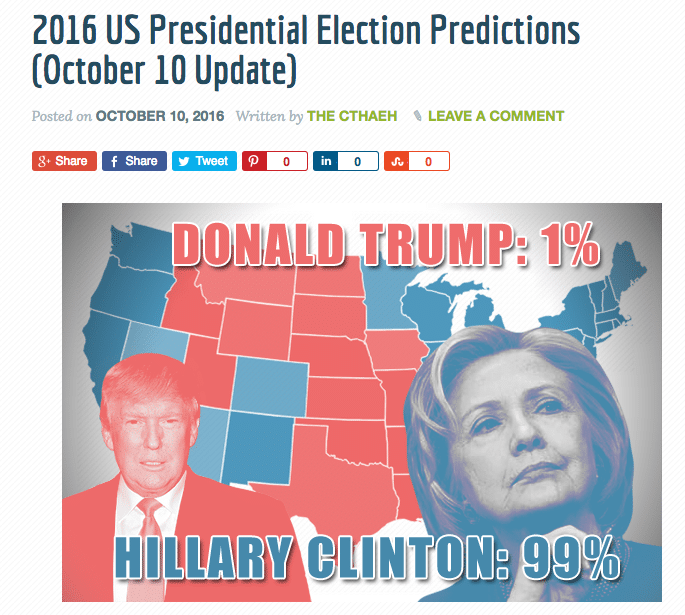
Looking at these charts should also serve to remind us one again to take the predictions of "experts" with a grain of salt.


Source: www. probalisticworld.com


Credit: The New York Times on Election Day


The decade also began with Americans stating that the two biggest problems facing the U.S. were the economy and jobs.

It ended with Americans citing government and immigration as the two biggest problems. Interestingly, neither the economy or jobs were mentioned by more than 6% of Americans in the 2019 survey.


Credit: Gallup


It started with the Dow Jones Industrial Average at 10,430. It ended with the DJIA at 28,538.

It started with the NASDAQ at 2,147. It ended at 8,973.

In fact, the NADAQ did not have one negative year in the entire decade. The Dow and
S&P only had one down year in the decade (including reinvested dividends)---2018.

Look at Charlie Bilello's summary of the NASDAQ over the last 10 years.


If you started with $1,000 on January 1, 2010 and compounded that money with these returns you would now have $5,282 ten years later.

It also appears to be the case that the 2010's was the first decade since 1850 (when reliable data is available) that the United States did not experience a recession.

The biggest mega tech trends during the 2010's were the increased use of mobile devices and streaming content.

This graph shows the accelerating use of mobile devices during the last decade.


Take a look as well at the dramatic increase in the use of streaming services in the 2010's.


Consider as well that a number of things that we take for granted today that were not in existence when the past decade began.

A partial list.

iPad

Smartwatches

Siri

Alexa

Instagram

Snapchat

Alibaba

Tesla S model introduced bringing electric cars legitimacy in the auto market

Self driving car features introduced

Tinder and the rise of online dating sites

Blue Apron and other meal kit deliveries

Door Dash and other restaurant food deliveries

Grocery deliveries and pick-ups

Lyft (Uber was first introduced in San Francisco in 2009)

Drones that consumers can use

Meatless meat such as Beyond Meat and Impossible Burgers

Hoverboards

Nest and SimpliSafe wireless home security systems

The best decade yet? There is a good argument to be made for it.

What about the next decade we are embarking on?

The American public is very optimistic as the decade begins. A Rasmussen survey found excitement about the new year at a hew high in their polling. 72% of Americans think it will be a good or great year. That number was only 54% a year ago and 47% in 2015.

I never want to discount the potential of the ultimate resource---human ingenuity and innovation.

However, I doubt that economic cycles are extinct. Bad times have historically followed good times.

And we have been living on borrowed time. We are now in the longest economic expansion in American history.

We have also been living on a lot of borrowed money. Those that rely too much on leverage eventually find themselves on the wrong side of that leverage.

We added over $10 trillion of debt in the last ten years at the federal level.


Debt by S&P 500 companies increased by over 50% in the last decade.


All of this was facilitated by a very accommodative Federal Reserve monetary policy over the last decade and historically low interest rates.

The Federal Reserve started reversing the QE (money printing) in 2018 that it had initiated as a response to the recession only to reverse course in late 2019 and start printing again.


Credit: https://seekingalpha.com/article/4314482-hour-is-getting-late

It was no coincidence that the stock market struggled in 2018 as this liquidity was being pulled from the system. The recent Fed action also goes a long way to explaining the late 2019 stock market "melt up".

As a result, the new decade begins on a very precarious precipice of debt as well as political division and uncertainty. President Trump has been impeached by the House and there are currently no plans for a Senate trial. The upcoming national election also looms large on the horizon. The decision that voters make in that election could go a long way in determining how the next decade will unfold.

No matter what happens on the big stage I suggest you take the advice of a great friend of mine and commit to personally making the 2020's "your best decade." Take heed of those things that you have the greatest control of personally and commit to making it great for you.

Here's to you having the 20/20 vision to make it happen.

Happy New Year and  may Your Best Decade be ahead of you!